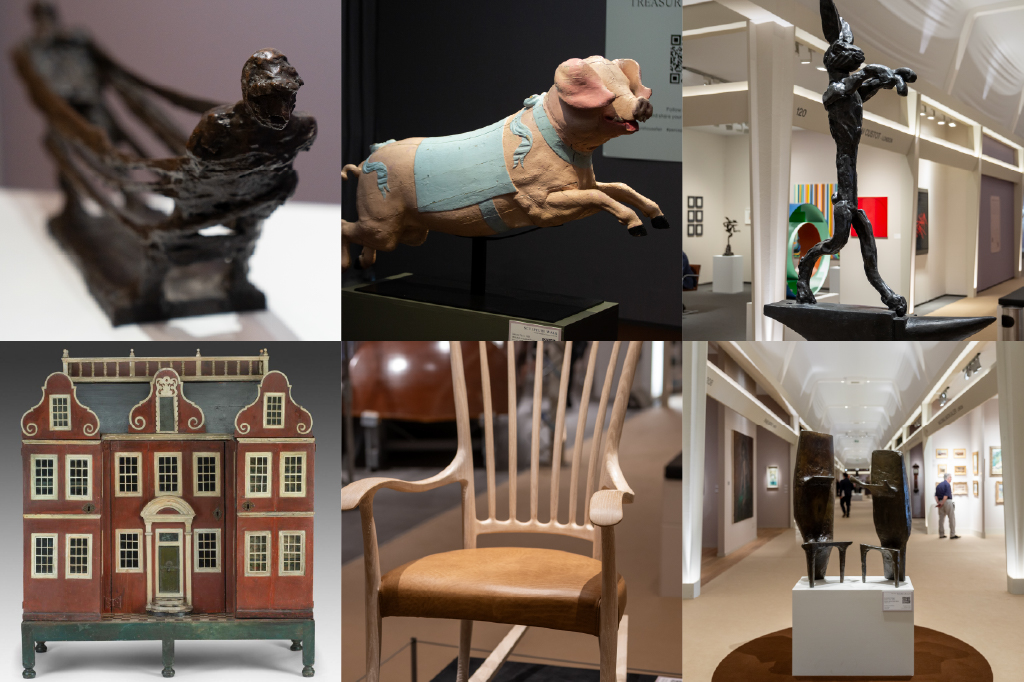
Wharton’s second Sculpture Walk was less about culture in the abstract and more about governance in action. Conceived as an exercise in applied board dynamics, it translated the hidden forces of alignment, challenge, and agenda-setting into sculptural form. This was governance made walkable: a boardroom without walls, its tensions and balances rendered in oak, bronze, and iron.
Sculptures, arranged in deliberate sequence, formed a governance circuit. Each stood as a metaphor in its own right and also acted as a live node in an interlinked system: surfacing misalignments, stress-testing decision quality, and mapping directly onto the levers that determine board effectiveness.
Directors had to move, shifting vantage points – and by extension, mental frames. Reflection became unavoidable. Dynamics otherwise invisible became tangible. Every step between the works was like a synapse firing: linking insights into a live model of how boards actually function under pressure.
The works were chosen for their ability to make governance visible. Breuer-Weil’s Brothers 2 exposed the strain and support between Chair and CEO. Flanagan’s Boxing Hare turned challenge into play, testing whether conflict forges or fractures. Bayol’s Carousel Pig questioned whether agendas are motion or progress. Armitage’s Sibyls asked if foresight and marginal voices are truly heard. Edmund Joy’s Surprise wardrobe explored what boards make room for, and Barnsley’s Chair grounded the system in stability and presence.
Each sculpture acted as both mirror and metaphor – a way for directors to see their own governance differently. The result was a shared journey that collapsed the distance between governance theory and lived boardroom dynamics. The walk became not just observation, but integration: translating insight into action, tension into alignment, and abstract responsibility into lived behaviour.
The sculptures as live metaphors for transformation
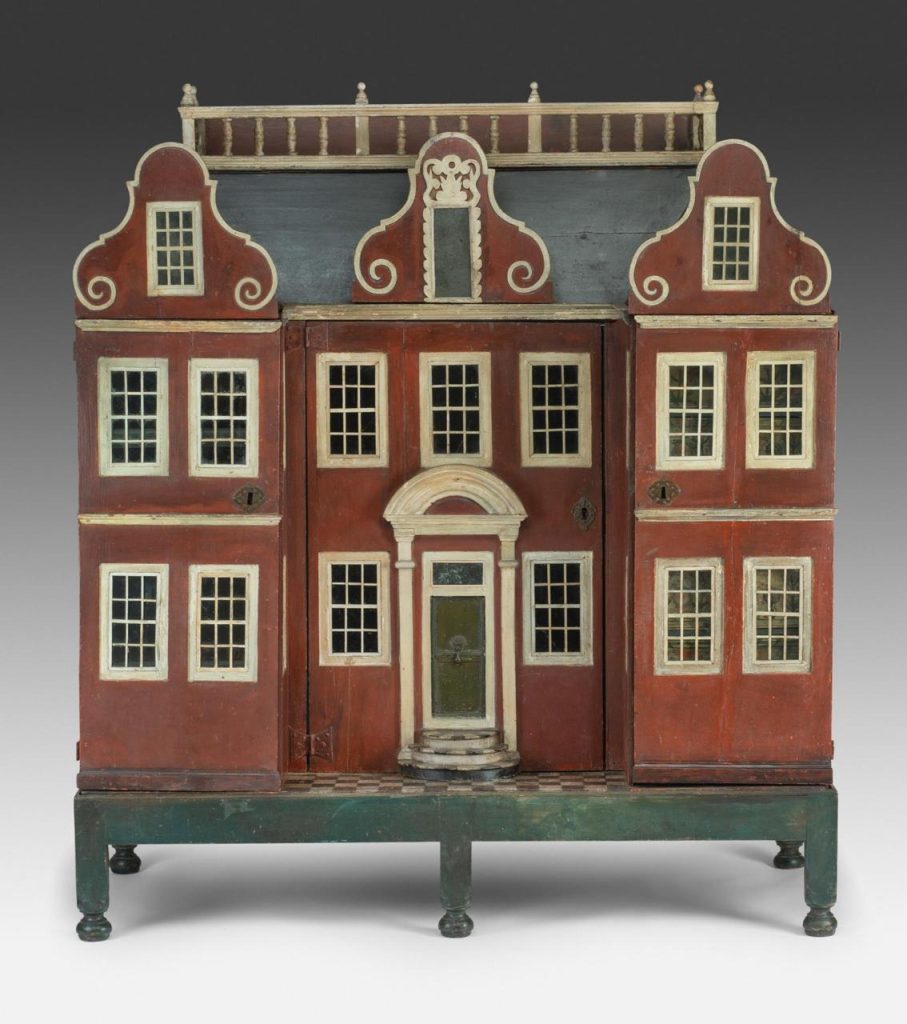
Edmund Joy –‘Mr Joy’s Surprise’
Are you spending sufficient time outside the boardroom as well as inside?
At first glance, Edmund Joy’s 17th-century sculpture might seem an odd inclusion for a board-level discussion. Modest in scale and designed to look like a doll’s house. Yet once opened it is not an empty container – you reveal its true function, a wardrobe to protect and to hold children’s garments. Knowing its purpose, it poses the question – in our governance structures, what are we actively making room for? New ideas, next-generation voices, unspoken truths? Are we cluttering the structure with legacy so dense that no space remains for growth?
It carries none of the grandeur often associated with corporate symbolism. Yet its intricacy is precisely the point. Every carved detail embodies craftsmanship, care, and the passing down of values across generations. Such effort and time spent on the details on the outside brings a parallel for boards – are we spending sufficient time outside the boardroom as inside?
In the boardroom, legacy is often invoked in broad strokes: a company’s heritage, founding vision, or enduring reputation. What Mr Joy’s Surprise reminds us is that legacy is built in the small choices: the policies crafted with care, the attention given to succession planning, the cultural detail that signals what is truly valued.
Disruption, in this context, is the realisation that neglect at the micro level erodes the macro narrative. Connection is the conscious act of designing governance that protects, nurtures, and transmits values worth carrying forward.
For directors, the risk is treating legacy as static, assuming that what worked in the past automatically holds in the present. This risks cultural drift, where organisations conserve symbols but lose substance. The opportunity is to treat legacy as craft: something built intentionally, with care for detail, adaptable to context, and consciously designed to endure.
Within the system map, Mr Joy’s Surprise functioned as the ‘legacy and space-making’ node. It often linked to Carousel Pig, because tradition without renewal risks circularity. It also connected to the Chair, as the role most responsible for holding space and ensuring voices are heard. The governance implication was direct: boards must audit not only their strategic horizon but their agenda architecture – what they make room for, what they conserve, and what they allow to clutter the cultural wardrobe.
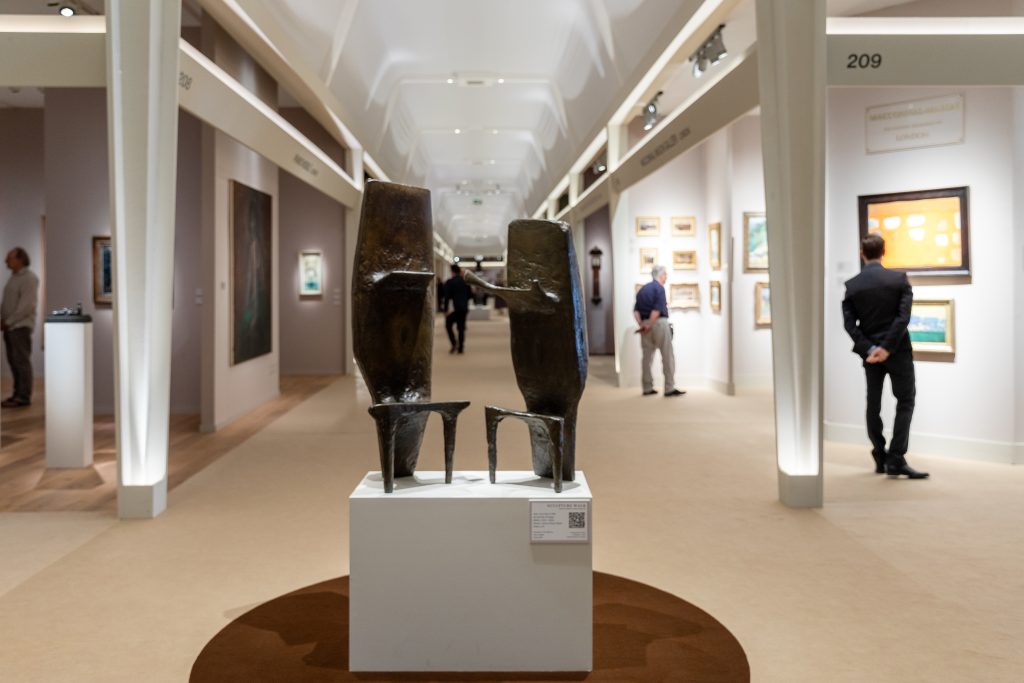
Kenneth Armitage – Sibyl I and Sibyl II
Do board members have voice not just a seat at the table?
Armitage’s bronze figures, abstracted and ambiguous, sit uneasily between human form and sculptural suggestion. They are not portraits, but presences: twin oracles, seated yet unsettled, their posture suggesting voice and foresight held in tension. For boards, they surfaced a question often left unspoken: whose wisdom is being heard, and whose foresight is being ignored?
In classical mythology, the Sibyls were female prophets, figures who carried uncomfortable truths. Their warnings were rarely convenient and often resisted – until hindsight revealed their accuracy.
In the boardroom, this dynamic plays out as whether diversity, particularly women, have not only a seat at the boardroom table but a voice that is heard. Foresight is abundant, but its usefulness depends on whether it is heeded.
Disruption, here, is the recognition that boards often curate which voices count, filtering foresight through hierarchy, politics, or familiarity. Connection is the discipline of ensuring marginal or uncomfortable voices are not just tolerated, but integrated into decision-making.
The tension between form and meaning in Armitage’s sculptures mirrors the challenge of culture itself. Their abstraction resists easy interpretation; they are layered, ambiguous, multiple. Culture in organisations is no different: it is not a single narrative but a set of overlapping voices, each with its own perspective. Boards that insist on clarity too quickly risk flattening nuance into platitude. The Sibyls remind us that ambiguity is not noise to be eliminated but signal to be interpreted.
Equally, the duality of the two figures raised questions about dialogue. Were they conversing, opposing, or simply sitting in parallel silence? Boards face the same risk: mistaking presence for participation, mistaking form for function. True dialogue is not just sequential speaking but mutual influence – the willingness to let what is said alter the course of what follows. A board that speaks past one another, or that hears without truly listening, is no different from two Sibyls cast in bronze: present, proximate, but disconnected.
From a governance lens, the sculptures raised issues of inclusion and oversight. Are boards structurally designed to capture diverse foresight, or are they optimised for reiterating established frames? Is dissent absorbed into the system as a productive counterweight, or is it neutralised into polite irrelevance? The risk of ignoring or sidelining foresight is not abstract: it manifests in strategic blind spots, regulatory failures, and reputational crises. The opportunity is sharper decision-making, earlier detection of risk, and more resilient strategy through multiplicity of view.
Within the system map, the Sibyls operated as the ‘foresight and marginal voice’ node. They often linked to Brothers 2, because the Chair–CEO dynamic is one of the most critical channels for whether uncomfortable truths surface or get buried. They also connected to the Boxing Hare, as both asked whether challenge was being channelled constructively or defensively. The governance implication was clear: boards must treat foresight as an asset class, not a by-product. Processes should be stress-tested for whether they amplify marginal voices or systematically mute them.
For directors, the Sibyls became a prompt: wisdom is not scarce, but our attention to it often is. The real question is not whether foresight exists within the system, but whether we are willing to make space for it even, and especially, when it is uncomfortable.
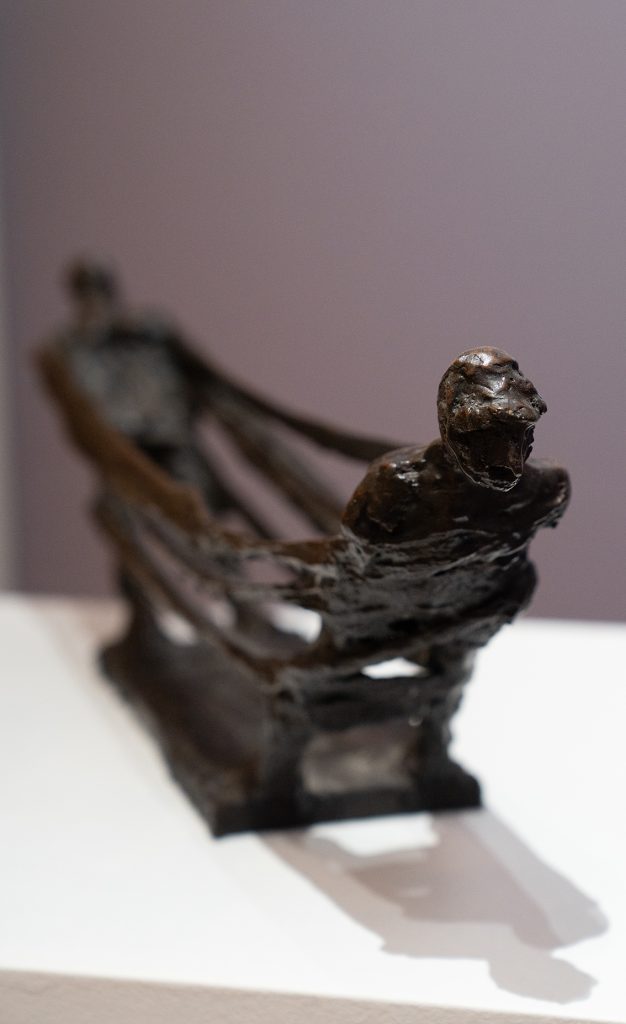
David Breuer-Weil – Brothers 2
Is the tension between the Chair & CEO supportive or leaning away?
Two colossal figures lean away from each other, torsos taut, arms locked in a tension that is neither embrace nor release. Breuer-Weil’s Brothers 2 is a study in ambiguity: are the figures straining against each other or supporting one another’s weight? For boards, this became a mirror for the most pivotal relationship in governance – that of Chair and CEO.
At its best, the Chair–CEO dynamic is a counterbalance that strengthens the system. Each brings different vantage points and authority, but when alignment is achieved the board can speak with one voice, reinforcing clarity through the organisation. At its worst, the relationship fractures into competing agendas, hidden rivalries, and unspoken strain. Disruption, in this context, is recognising that apparent unity may mask underlying fracture. Connection is the act of moving through tension with trust intact – transforming strain into shared strength rather than destructive pull.
Boards often underestimate how much collective strain is required to shift deeply embedded behaviours. Culture change, like the tautness in Brothers 2, demands coordinated pressure. A single figure cannot bend the system alone. When Chair and CEO pull in opposite directions, the organisation absorbs that fracture: strategy delivery becomes inconsistent, executives play to whichever narrative suits them, and cultural integration splinters along leadership fault lines. But when both exert pressure in alignment, the tension itself generates momentum, stretching the organisation forward rather than tearing it apart.
The sculpture also invited reflection on trust. Trust, in governance, is often misconstrued as the absence of conflict. Brothers 2 insists otherwise: the figures remain bound even in struggle. Trust, properly understood, is the capacity to withstand tension without rupture. For Chair and CEO, this means holding each other accountable, sounding out, debating vigorously, even disagreeing – but without allowing disagreement to destabilise the system. Boards that sanitise conflict risk superficial unity but brittle culture; boards that manage conflict constructively build resilience.
From a systems perspective, the sculpture extended beyond the Chair–CEO dyad. Its dynamics mirrored executive committees and leadership teams more broadly. Are members aligned around shared purpose, or are they masking competitive strain behind ritualistic consensus? The sculpture’s physical scale reminded leaders that these tensions are not minor background noise – they shape the entire architecture of governance.
For directors, the risks are concrete. Misaligned top relationships correlate with slower crisis response, fractured messaging to investors, and lower confidence from regulators. The opportunity, conversely, is formidable: when Chair and CEO truly champion the same direction, they act as force multipliers, removing obstacles for their teams and enabling the board to operate at strategic altitude rather than firefighting interpersonal friction.
Within the system map, Brothers 2 functioned as the ‘alignment and strain’ node. It frequently linked to the Sibyls, because the way foresight is treated often depends on whether Chair and CEO create space for marginal voices or close ranks against them. It also connected to Boxing Hare, as the quality of challenge in the boardroom is inseparable from the quality of trust at the top. The governance implication was clear: boards must audit not just their structures but their relationships – because culture follows the fault lines of alignment.
For boards, the question Brothers 2 posed was simple but uncompromising: are your leaders lifting each other, or pulling apart? The answer is rarely static. It shifts, like the sculpture itself, depending on angle and vantage point. The challenge for governance is to ensure that tension becomes generative, not erosive.
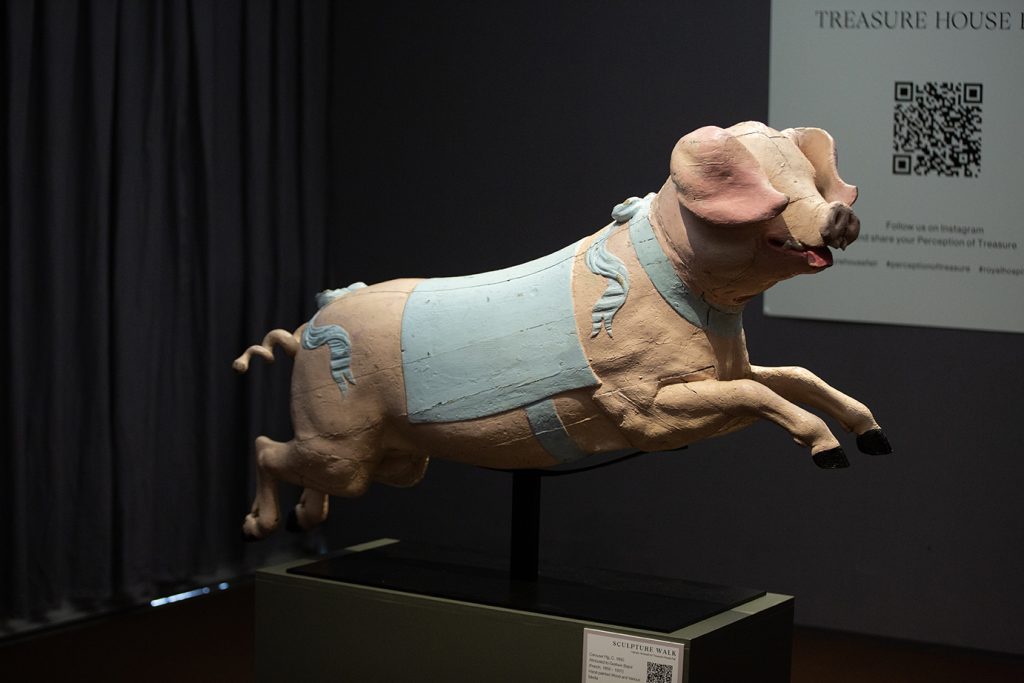
Gustave Bayol – Carousel Pig
Is the board agenda evolving or going around the same topics and decisions?
Carved in the late 19th century, Bayol’s carousel pig carries the charm of nostalgia: brightly painted, animated in form, designed to delight children on a ride that spins but never moves forward. It is playful, even whimsical – yet for boards it became an unflinching metaphor for circularity. The energy, colour, and music of a carousel disguise the fact that it always returns to the same point. The question it forced upon directors was direct: are we mistaking activity for progress?
In some executive meetings and boardrooms, agendas create the illusion of motion. Papers are circulated, presentations delivered, debates conducted with apparent energy. Yet if the same issues resurface quarter after quarter, or if decisions never move from consideration to execution, the ride becomes ritual rather than progress. Disruption, here, is the recognition that repetition is not always resilience; sometimes it is inertia disguised as diligence. Connection is the discipline of breaking cycles, designing agendas that build cumulatively rather than circle endlessly.
The carousel also exposed the role of narrative in sustaining belief. Carousels are as much about story as they are about motion. Children ride them not for distance but for experience, sustained by imagination. Boards too can fall into the trap of narrative circularity – rehearsing the same strategic stories to reassure themselves, while little changes in substance. This tendency is amplified by investor presentations, annual reports, and well-worn corporate tropes that make the ride feel meaningful. The sculpture pressed leaders to ask: are we clear on our narrative? are we sustaining a narrative because it drives progress, or because it masks its absence?
Nostalgia was another sharp edge. Carousels carry warmth, a connection to tradition and play from another era. In governance, nostalgia often anchors boards to practices or norms that once served and created their ‘secret sauce’ but may no longer fit. Directors may cling to reporting formats, committee rituals, or informal dynamics out of comfort rather than effectiveness. The risk is strategic stasis, where boards are not embracing the new disruptive shifts – technological, regulatory, societal – reshape the landscape outside.
From a systems lens, Carousel Pig warned against equating activity with adaptability. Energy without direction dissipates resources and erodes credibility. Boards that perpetually revisit the same issues may exhaust executive teams, diminish trust in oversight, and miss opportunities that require decisive, directional change. Yet the opportunity embedded in the metaphor was also clear: circularity can be repurposed into rhythm. Returning to core issues with intentional progression builds resilience. The challenge is to design the loop as spiral, not circle – revisiting, but always at a higher level of depth and decision.
Within the system map, Carousel Pig served as the ‘motion vs progress’ node. It linked closely to Mr Joy’s Surprise, because legacy without fresh space easily hardens into cycles. It also tied to Chair, since the structuring of agendas and facilitation of meetings largely determines whether boards spiral forward or circle back. The governance implication was pointed: audit your board calendar not for busyness but for trajectory. Does each agenda move issues forward, or is the board riding an ornate carousel of its own design?
For directors, the sculpture’s challenge was deceptively simple: are you measuring your effectiveness by the energy of the ride or by the distance travelled? The difference between carousel motion and strategic momentum is the difference between governance as theatre and governance as leadership.
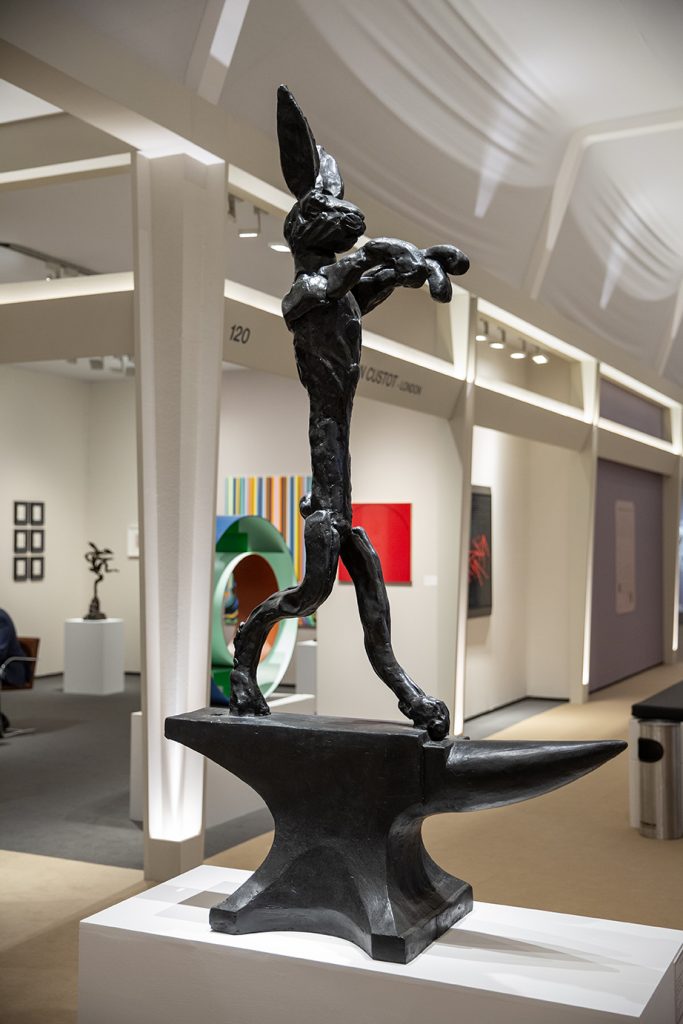
Barry Flanagan – Boxing Hare
Are you having healthy or destructive challenge and debate?
Perched improbably on an anvil, Flanagan’s hare is playful, agile, and full of kinetic energy. Its boxing stance is almost comic, yet beneath the humour lies provocation: is this combat, performance, or a kind of sparring that sharpens both participants? For boards, the sculpture became a live question about the role of challenge. Is our debate healthy or destructive? Are we fighting, or are we forging?
In governance, challenge is often framed as duty. Non-executives are tasked with curiosity and scrutiny, executives with accountability and defence, committees with evidence and oversight. Delivered in the right way this creates an effective system underpinned by trust. Yet the real measure of challenge is not whether it occurs, but how. Destructive challenge locks boards into cycles of resistance, status assertion, and defensiveness. Constructive challenge, by contrast, generates clarity, resilience, and better outcomes and is a healthy part of the board dynamics.
Disruption, in this context, is the recognition that high energy is not inherently healthy – conflict can erode as easily as it can refine. Connection is the practice of embedding curiosity and respect into debate so that friction produces light, not heat.
The juxtaposition of hare and anvil reinforced this tension. The anvil, symbol of industry and weight, anchored the hare’s irreverence. In leadership terms, it asked whether boards allow space for playfulness in cultures otherwise dominated by gravity. Humour and levity are not distractions but signals of psychological safety: if directors feel secure enough to be irreverent, they are also more likely to voice dissent, pose naive questions, and surface unorthodox perspectives. Conversely, if every exchange is burdened by process and formality, curiosity is stifled and challenge collapses into ritual.
The hare also reminded leaders that high performance is not accidental. In nature, hares fight not as entertainment but as part of seasonal cycles – testing, adapting, performing at peak energy when it matters most. For boards, this translated into the importance of building high performance leadership bench strength, with space for innovation and thinking. Governance needs moments of intensity, but also recovery, clarity of roles, and mutual trust to ensure those moments refine rather than fracture the system.
Within the system map, the Boxing Hare operated as the ‘challenge and curiosity’ node. It linked naturally to Brothers 2, since the Chair–CEO relationship often sets the tone for whether board challenge is constructive or corrosive. It also connected to the Sibyls, as marginal voices often carry the most insightful challenges, provided the board has cultivated a culture willing to hear them. The governance implication was clear: boards must monitor not only whether challenge happens but whether it contributes to alignment, resilience, and decision quality.
For directors, the hare’s absurd boxing stance posed a deceptively serious question: are we engaging in sparring that sharpens, or in combat that divides? The answer, as ever, lies less in the energy expended than in the outcomes forged.
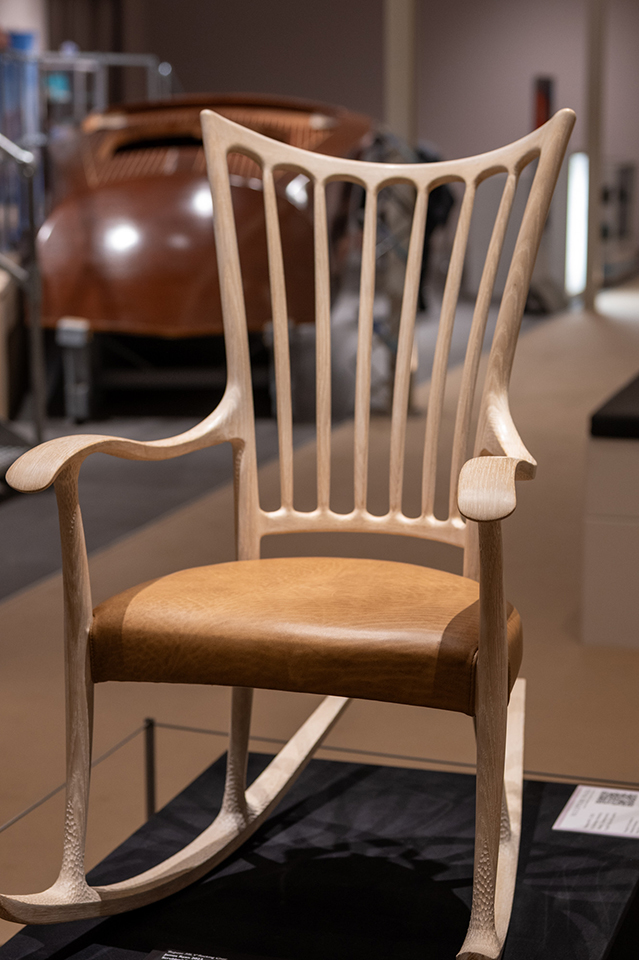
Barnsley Workshop – Chair
Is your Chair actively observing, listening, and including all views?
At first glance, the crafted oak chair is understated – plain compared to the exuberance of Flanagan’s hare or the monumental strain of Brothers 2. Yet its quiet presence made it one of the most resonant pieces on the walk. Solid, balanced, proportioned with care, it is designed not to draw attention to itself but to create space for others. In governance terms, the chair is both metaphor and role: stability at the centre, holding the system steady while enabling all voices to be heard.
The temptation in boardrooms is to equate stillness with inactivity, to assume that leadership must always be visible in motion. But the Barnsley chair insisted otherwise: stillness, when intentional, is itself an act of design.
Disruption, in this context, is recognising that governance obsessed with busyness – overloaded agendas, relentless pace, performative oversight – erodes capacity for reflection and weakens decision quality. Connection is the act of crafting space: deliberately slowing the system so that insight can surface and innovation can breathe.
The ethos of the Arts and Crafts movement, of which Barnsley was a part, is instructive here. Craft was not about decoration but about integrity of materials, care in construction, and harmony between form and function. What if boards treated their own culture this way? Rather than assembling processes piecemeal, could they craft governance structures with the same intention – balancing efficiency with human experience, durability with adaptability, authority with trust?
The chair also spoke directly to the role of the board Chair – the most important piece of the jigsaw. A chairperson’s effectiveness is rarely judged by what they say themselves, but by how they enable others to speak. Are they actively observing and listening? Are they ensuring that dissenting voices are heard, not just tolerated? Are they structuring space so that dialogue moves from ritual to substance? The risk is clear: a Chair who dominates creates silence by exclusion, while a Chair who abdicates creates silence by absence. The opportunity is equally sharp: a Chair who crafts space well produces a board dynamic that is balanced, inclusive, and resilient under strain.
From a systems perspective, the sculpture reminded leaders that governance is as much architecture as performance. Chairs, both literal and metaphorical, are frameworks designed to support weight. Boards must ask: what is our culture designed to hold? Is it trust, shared purpose, innovation? Or is it hierarchy, defensiveness, and routine? The answer is not abstract – it is lived in every board meeting, in the balance between scrutiny and support, speed and reflection, challenge and cohesion.
Within the system map, the Chair acted as the ‘stability and inclusion’ node. It linked directly to Carousel Pig, because agenda design determines whether boards circle endlessly or progress directionally. It also connected to Sibyls, since the Chair’s ability to create space is what determines whether marginal voices are amplified or ignored. The governance implication was practical: the Chair role must be explicitly designed, supported, and reviewed as a lever of cultural effectiveness, not left to individual style or personality.
For directors, the sculpture’s lesson was quiet but uncompromising: stillness is not absence but presence. Governance is not strengthened by perpetual motion but by deliberate design of space, stability, and voice. What does your board culture invite people to rest in? If the answer is trust and purpose, the Chair has done its work. If the answer is hierarchy and defensiveness, the structure itself must be re-crafted.
Translating metaphor into governance action
The sculptures also acted as catalysts for specific conversations. Brothers 2 provoked discussions on whether the Chair–CEO dynamic was generative or erosive. Boxing Hare became a live metaphor for board challenge – sparring that forges or combat that divides. Carousel Pig raised the question of whether agenda cycles were motion without momentum.
In one session, participants linked these metaphors directly to board oversight of AI adoption. Were they training their models – and their instincts – on too narrow a dataset? Sibyls became warnings against blind spots in foresight, reminding boards that perspective is as important as processing power.
In another, directors tied Chair to the FCA’s emphasis on psychological safety and conduct risk. Without stable, inclusive leadership at the centre, whistleblowing and challenge fade – even if compliance frameworks look robust on paper. The sculptures reframed governance not as box-ticking but as culture-shaping, with direct implications for regulatory confidence.
What this sculpture walk reinforced is one of Wharton Business Consulting’s core beliefs: corporate governance, like culture, must be examined through multiple disciplined lenses.
The systems theorist’s view
From a systems perspective, boards are not static groups of individuals but dynamic networks where flows of information, trust, and authority circulate. The sculptures made this visible. Carousel Pig revealed feedback loops that consume energy without producing direction – the governance equivalent of a system trapped in circular motion. Brothers 2 showed that alignment at the top is not a matter of posture but of systemic tension: pressure must be held in balance for the structure to endure. When strain tips too far one way, the system destabilises; when it is absorbed constructively, the system generates momentum.
Systems thinking also shifts focus from what is visible to what is driving the visible. Boxing Hare looked like playful challenge, but in system terms it was a test of feedback integrity: is challenge absorbed as data to refine the system, or rejected as noise that destabilises it? Sibyls reminded us that foresight is only useful if it enters the circuit. A system that excludes marginal voices starves itself of the very inputs that prevent collapse under stress.
For Wharton Business Consulting, this is governance architecture in motion. Systems theorists look for interdependencies, bottlenecks, and latent pressures – the points where the flow of information or trust will either enable adaptation or create fracture. In practice, this means treating board dynamics not as interpersonal quirks but as structural variables: how agenda cycles create feedback loops, how Chair–CEO alignment stabilises or destabilises the system, how challenge and foresight are absorbed into decision-making flows.
The sculptures became live models of these dynamics. They allowed directors to see governance as an interconnected architecture rather than a sequence of discrete decisions – a system where disruption cuts connections and integration reweaves them.
The behavioural scientist’s view
From a behavioural science perspective, board dynamics are shaped as much by perception and bias as by structure. The sculptures acted as projective tools – objects onto which directors cast their own assumptions, preferences, and anxieties. What people saw first often revealed more about their own cognitive filters than about the artwork itself.
In Sibyls, some immediately interpreted the figures as silent, sidelined presences, while others saw dialogue and foresight. The difference was diagnostic: do directors view marginal voices as excluded, or as sources of wisdom waiting to be heard? Boxing Hare divided observers too – some read it as combative conflict, others as spirited sparring. The interpretation mapped directly to how those leaders viewed challenge in their own boardrooms. For behavioural scientists, these instant readings surface unconscious bias in real time.
Boards rarely appreciate how deeply bias shapes their decisions. Confirmation bias can make familiar narratives in Carousel Pig feel like progress when they are actually repetition. Status bias can elevate the Chair–CEO dynamic in Brothers 2 into performance, while sidelining equally critical voices around the table. Even nostalgia bias played out in Mr Joy’s Surprise – reverence for heritage that risks hardening into inertia.
The sculptures created what psychologists call a “safe provocation.” By debating the meaning of bronze or oak rather than strategy documents, directors could project their assumptions without defensiveness. In WBC terms, this became a live bias audit: an exercise in making implicit filters explicit so they could be tested, recalibrated, and redesigned before they constrained decision-making.
For behavioural scientists, this reinforced a core principle: governance cannot be understood purely through formal roles or rules. It must also be analysed through the cognitive frames directors bring into the room. The sculptures turned that invisible layer into something discussable – a rare chance for boards to interrogate not just what they decide, but how they decide.
The historian’s view
For a historian, the sculptures charted the long arc of governance – the tension between inherited forms and the need for reinvention. Mr Joy’s Surprise, carved in the 17th century, embodied continuity: the painstaking craft of passing values from one generation to the next. It reminded boards that governance is never just about present oversight; it is about embedding detail that will be inherited, sometimes centuries later.
Set against this, Bayol’s Carousel Pig spoke from the late 19th century, full of nostalgic charm yet locked in circular motion. Here, history served as a warning: boards can be seduced by tradition, returning to familiar debates out of comfort rather than necessity. Nostalgia, while anchoring, can also trap. The challenge for governance is discerning which historical practices remain a stabilising backbone, and which have become rituals masking inertia.
Brothers 2 and Boxing Hare pulled the story into the contemporary. Their ambiguity reflected the complexity of modern board dynamics: trust and tension intertwined, challenge both necessary and risky. For the historian, these pieces made visible a truth seen across institutions: that leadership rarely evolves by discarding the past outright, but by reframing it for new conditions. Chairs and CEOs are heirs to centuries of governance models; their alignment or fracture becomes part of that lineage.
What the sculptures offered was not a chronology but a juxtaposition. Seventeenth-century craft sat beside surreal modern forms, reminding directors that governance is always a conversation between tradition and transformation. Institutional resilience depends on knowing which elements of heritage are assets to be carried forward, and which have hardened into anchors that hold organisations back.
For Wharton Business Consulting, this is a principle embedded in our integration playbooks: legacy must be respected without being allowed to ossify. The historian’s lens reframed the board walk as a living archive – a reminder that every decision directors take today will one day be read as heritage. The question is whether that heritage will be remembered as ballast or as foundation.
The risk manager’s view
From a governance and risk perspective, the sculptures were stress tests in physical form. Each piece posed the same question a regulator might: does the system hold when tested, or does it collapse under strain?
Brothers 2 was a direct proxy for the Chair–CEO relationship. If those two figures pull in opposite directions, the entire structure absorbs the fracture. Misalignment at the top creates systemic risk: fractured messaging to markets, inconsistent executive behaviour, and erosion of stakeholder confidence. Conversely, when pressure is held together, the system generates stability. For a risk manager, this was operational resilience made tangible.
Carousel Pig surfaced a different vulnerability: activity without progress. Agendas that circle endlessly can look like oversight but conceal stagnation. Regulators increasingly focus not just on whether boards meet, but whether they add value. The carousel reminded directors that “busy governance” can itself be a form of risk – masking inaction under the guise of diligence.
Boxing Hare became a case study in conduct risk. Spirited challenge can strengthen oversight, but when debate turns combative it corrodes trust and undermines decision-making. In a regulatory context, this maps to psychological safety: without it, whistleblowing, challenge, and dissent diminish, leaving boards blind to brewing issues until they become crises.
Even Mr Joy’s Surprise carried a risk message. Legacy systems – reporting formats, committee rituals, governance codes – are valuable, but when left unexamined they ossify into blind spots. Risk managers treat these as inherited control frameworks: some still relevant, others overdue for recalibration. The wardrobe reminded boards that risk lies not only in gaps but in clutter – systems so overburdened with legacy detail that they obscure rather than protect.
For us at Wharton Business Consulting, the sculptures underscored a principle we embed in our risk and governance work: culture and conduct risk are inseparable. A system can look compliant on paper yet fail in practice if challenge is muted, foresight ignored, or leadership alignment fractured. The sculptures translated this into lived metaphor. They showed directors that every dynamic in the boardroom – from agenda design to interpersonal strain – is itself a risk control, or a risk exposure.
The anthropologist’s view
Anthropology treats governance not as process, but as ritual: a web of symbols, practices, and shared meaning through which power is enacted and legitimacy is maintained. The sculptures exposed those rituals in physical form, asking boards to see themselves not as a chart of roles but as a culture in motion.
Mr Joy’s Surprise embodied the ritual of legacy. Like the wardrobe designed to protect and pass down garments, board practices often function as vessels of inherited meaning. Directors may not always notice the symbolic weight of succession planning, agenda design, or the Chair’s tone – yet these become rituals that encode what is truly valued.
Sibyls surfaced the anthropology of voice. Who is allowed to speak? Whose foresight is heeded? In many cultures, marginal voices carry symbolic power, yet are simultaneously constrained. The twin forms reminded boards that inclusion is not only structural but symbolic – signalling who belongs in the story of governance.
Brothers 2 illustrated the ritual of alignment. The visible tension between Chair and CEO becomes, in anthropological terms, a public performance of unity or fracture. Stakeholders – employees, investors, regulators – read these performances as cues of institutional coherence. When the figures strain apart, culture interprets fracture; when they hold together, culture interprets resilience.
Carousel Pig captured ritual repetition. Just as carousels circle back endlessly while sustaining the illusion of progress, board rituals can disguise stasis as oversight. The anthropologist sees in this not inefficiency, but narrative: the stories boards tell themselves to preserve legitimacy, even when motion is cyclical.
Boxing Hare brought ritualised conflict into view. Anthropologists recognise that many cultures sustain themselves through managed contest – sparring that both tests and bonds the group. The hare on its anvil reminded boards that challenge is not incidental but ritual: a way of re-enacting authority, distributing status, and legitimising outcomes.
Finally, Chair embodied the ritual of space. To pull up a chair is to invite presence, to claim legitimacy, to join the circle. A well-crafted chair is not passive furniture but a symbol of stability and inclusion. For boards, the question is anthropological as much as structural: what does our governance invite people to rest in? Trust and shared purpose, or hierarchy and defensiveness?
For Wharton Business Consulting, the anthropological view reframes board dynamics as narrative reconstruction. Every decision, every ritual, every symbolic act contributes to the ongoing story of who the board is and how it leads. Integration work, under this lens, is not just about aligning processes – it is about reweaving the story so that people recognise themselves in the future state.
The prism of board dynamics
The Sculpture Walk never offered a single “correct” interpretation. It functioned as a prism: the same sculpture refracted differently through different lenses, each view valid, each incomplete on its own. For boards, this was not academic. It was a lived reminder that governance effectiveness demands disciplined plurality – the ability to hold multiple perspectives without defaulting to the comfort of a single narrative. The sculpture walk made this tangible.
The sculptures gave directors a shared vocabulary for dynamics that are otherwise elusive: legacy and space-making, foresight and marginal voices, alignment and strain, motion versus progress, challenge and curiosity, stability and inclusion. They collapsed the distance between theory and practice, between governance as procedure and governance as culture.
For Wharton Business Consulting, this was the value: a board-level diagnostic that turned intangible dynamics into visible, discussable, and actionable form.
Photo Credit: Harvey Horswell Ltd
We strive to stay ahead of your people challenge
Sign up to our newsletter to receive our regular research and thinking on the latest hot topics.